

Reflecting on a 22-year legacy: First Roundtable on the ICRC’s Physical Rehabilitation Programme in India
Structured discussions, organized around beneficiary, technical, institutional, and policy levels, enabled participants to evaluate achievements, address challenges, and identify opportunities for further progress. Key themes such as access, quality, social inclusion, and sustainability were at the forefront, with partners presenting models for long-term impact. Panels on capacity building, system strengthening, and disability inclusion featured prominent stakeholders, including Indian Council of Medical Research (ICMR), World Health Organization (WHO), Pt. Deendayal Upadhyaya National Institute For Persons with Physical Disabilities (PDUNIPPD), Indian Association of Physiotherapists (IAP), Orthotics & Prosthetics Association of India (OPAI) and v-shesh.Macro-level discussions highlighted inter-sectoral collaboration, affordable innovation, and last-mile delivery with contributions from organizations like Artificial Limbs Manufacturing Corporation of India (ALIMCO), Andhra Pradesh MedTech Zone (AMTZ), National Centre for Promotion of Employment for Disabled People (NCPEDP), AT Scale and Bharat Centre for Olympics Research and Education (BCORE) underscoring the collective commitment to advancing assistive technology and strengthening support systems for long-term sustainability.
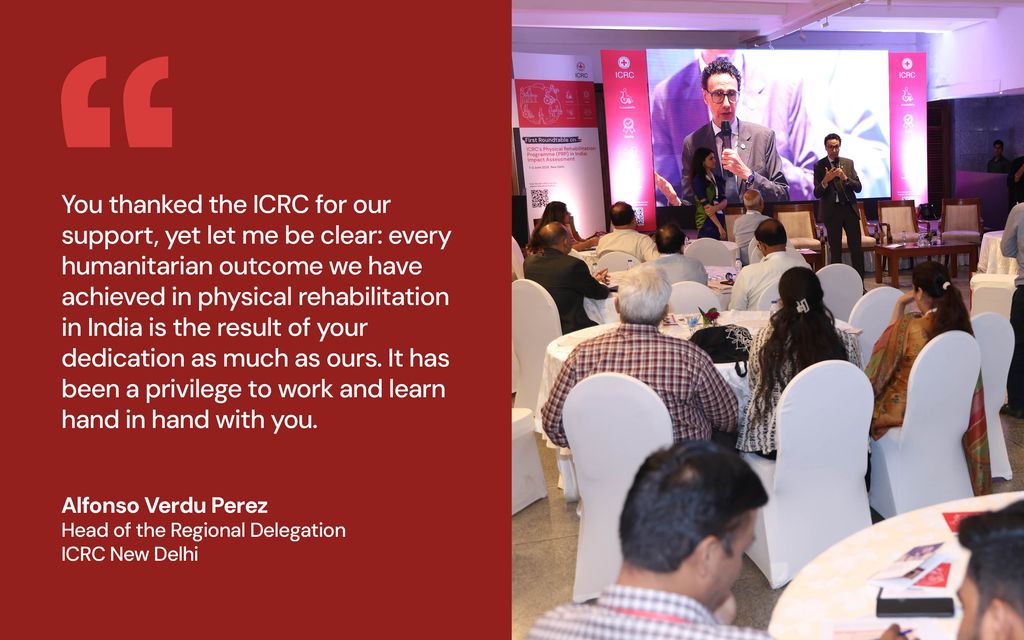
Paving the way forward: lessons, outcomes, and sustainability
The roundtable served as a platform to reflect on key lessons from the programme’s transition and phase-out process, with a focus on sustainability planning, resource mobilization, and fostering local ownership to ensure the programme’s achievements are sustained beyond its conclusion. The insights, success stories, and experiences shared by partners provided valuable guidance that can inform the ICRC’s global physical rehabilitation efforts in diverse humanitarian contexts. These contributions will support initiatives aimed at strengthening national systems through partnerships, capacity-building, and institutional development.
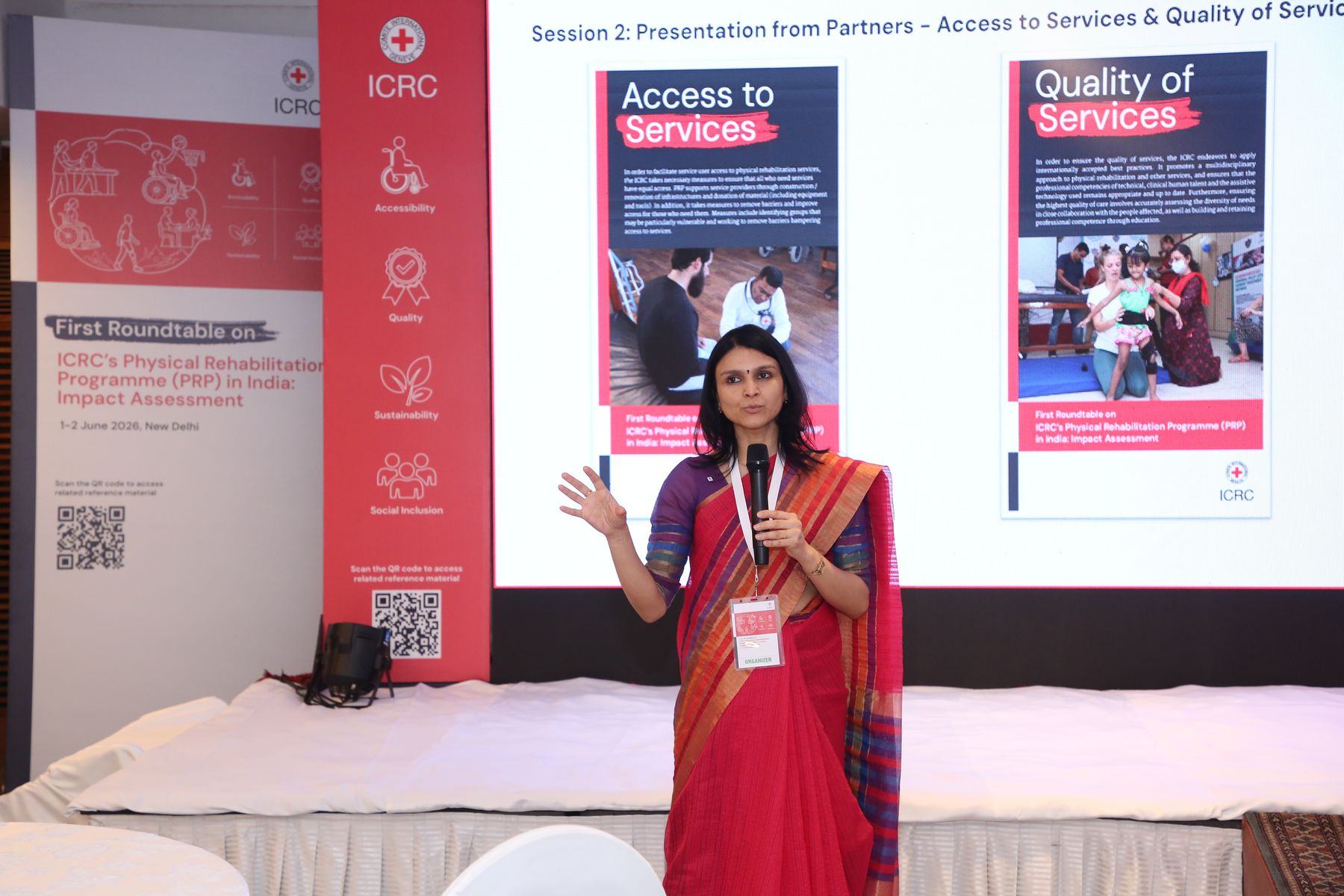
While the discussions do not represent a final evaluation, the feedback gathered will play a crucial role in the ongoing impact assessment and the final consultation planned for October 2026. Looking ahead, the ICRC sees this transition not as the conclusion of its role, but as an opportunity to build on the programme’s legacy. By collaborating with partners, institutions, and authorities in India and globally, the ICRC aims to ensure the programme’s long-term impact is preserved and its successes are leveraged to shape future initiatives.
Legal Disclaimer:
EIN Presswire provides this news content "as is" without warranty of any kind. We do not accept any responsibility or liability for the accuracy, content, images, videos, licenses, completeness, legality, or reliability of the information contained in this article. If you have any complaints or copyright issues related to this article, kindly contact the author above.
